

The signs are often visible: a student falling asleep in class, a friend withdrawing from their group, someone who seems “fine” until they suddenly aren’t. Yet behind these everyday moments, depression has become one of the most widespread struggles among teens, affecting roughly one in five students each year, according to the National Institute of Health.
Students say the weight of expectations can make a normal day feel overwhelming. “Recovering isn’t a straight line,” said Bee*, a student who asked to remain anonymous. Bee first experienced depression during middle school, when family struggles and siblings’ treatment left them spiraling.
“I developed some unhealthy coping skills,” they said, “but opening up to friends and social workers helped me start feeling better.”
Others share similar stories. Classmate Zephyr*, who also chose anonymity, remembers shutting down in seventh grade after falling in with “the wrong people” and losing the confidence to ask for help.
“I was always sleeping, angry, sad, and confused,” they said. Their first therapist didn’t work out, but the second, a counselor they’ve now had for three years, became a lifeline.
“When I feel I’m going down again, she’s only an email away,” Zephyr said.
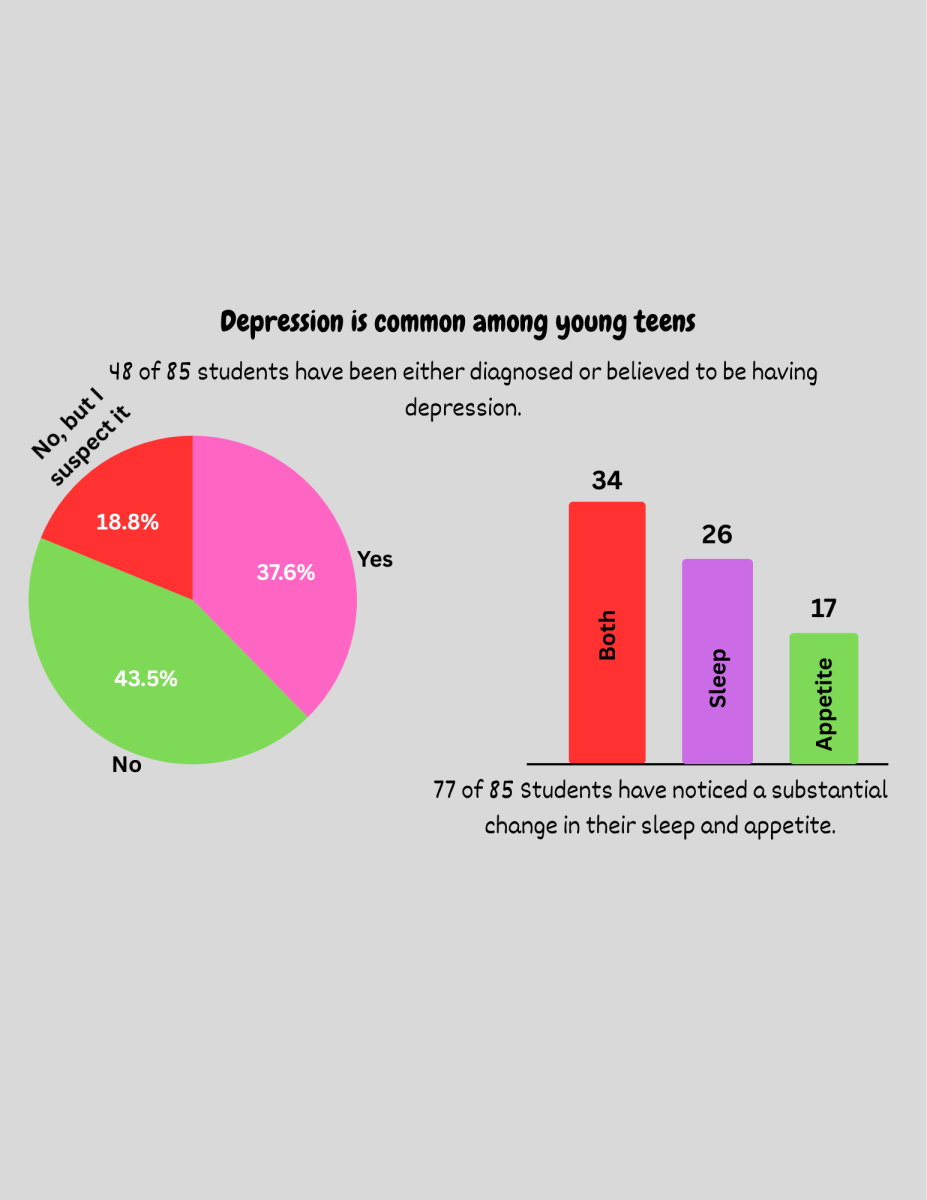
According to a recent Fielder survey, 19 students say that while depression looks different for everyone, the silence surrounding it is constant. They often hide symptoms while trying to balance late-night homework, grading deadlines, sports, jobs, and social expectations. Burnout has become both common and normalized.
For some, the struggle reaches a breaking point. Aiden* first entered a mental hospital in sixth grade after a school social worker noticed warning signs.
“I tried to lie and say everything was fine, but it clearly wasn’t,” Aiden said. What followed was years of instability, family conflict, fear at home, multiple hospitalizations, and court-ordered therapy.
“There was a lot I was balancing on top of school,” Aiden said, “I am healing and forever will be.”
Despite the differences in their stories, nearly every student surveyed shared one fact: they know many others who are dealing with the same battle. Most estimated that half of their friend group has faced depression at some point.
Schools have begun responding with mental health days, expanded counseling services, and awareness programs.
If you need help dealing with depression, you can call the 988 hotline number.
*Name has been changed